Carmanah®
Connected Traffic Beacon and Sign Systems
Carmanah is a leading manufacturer of compliant solar and AC-powered systems for traffic safety, with thousands of installations across North America.
Introducing the MX Series of connected beacons & signs
Out of the box and into the cloud, immediately
With MX, connectivity isn’t an add-on. We’ve embedded it into the hardware so that it automatically connects and reports to the cloud (and a free local app) the moment it receives power.
MX Series system features

Free Connectivity
Systems come with built-in connectivity and three years free.

Actionable Alerts
Receive timely email/text alerts about your MX systems.
Remote Scheduling
Create, delete, and adjust schedules, individually and in bulk.
MX Cloud ™
Access system status, settings, and data from anywhere.
MX Field App ™
Quickly set up and make changes with iOS/Android app.
Easy Installation
Embedded connectivity is factory tested and works out of the box.
Every MX system ships with 3 years free remote connectivity.
With MX, connectivity isn’t an add-on. We’ve embedded it into the hardware so that it automatically connects and reports to the cloud (and a free local app) the moment it receives power.
3 YEARS FREE

MX Lite
Get actionable alerts and a network-wide view of your systems.
3 Years Free | $79/year at year 4
Features (Core)
- Out-of-the-box connectivity
- System alerts (email/text)
- Remote asset management with GPS map view and more

MX Plus
Make changes to your system settings and access data from anywhere.
$99/year
All MX Lite features and
- Remote programming
- Knockdown alerts
- Data Charting
- …and more

MX Pro
Create, edit and set schedules in bulk and on-the-fly.
$249/year
All MX Plus features and
- Remote scheduling
- 5-year historical data
- Export functionality
- …and more
MX Products
MX for Crosswalks
Enhance safety at unsignalized crossings with Carmanah’s legendary RRFBs and LED enhanced signs—now with system alerts and pedestrian activation data!

MX for School Zones
Put an end to speeding with attention-grabbing school zone LED beacons and signs that can be managed—and scheduled—from anywhere.

MX for Radar Speed Signs
Enhance safety in neighborhoods and school zones with MUTCD-compliant vehicle speed display signs.

MX for Stop & Warning Signs
Improve conspicuity and compliance across a wide range of stop sign flashing beacons, and get a comprehensive view of all your traffic safety assets.

More popular systems
Chevron Warning Systems

Vehicle Detection Systems

Wrong Way Driving Systems

“Carmanah has the best equipment we have used so far. They deserve a lot of credit for making the RRFB enhanced crosswalk available across the USA.”
Bill Baranowski, PE,
City Traffic Engineer, West Jordan, UT
- RRFB Application GuideDownload this guide for the most common RRFB placements and installations at marked, uncontrolled and mid-block crosswalks with MUTCD 11th edition guidelines
- Radar Speed Signs Application GuideDownload this visual guide for the most common radar speed sign applications, including placement, sign legibility and MUTCD 11th edition guidelines
- School Zone Safety Application GuideDownload this guide that oulines current industry recommendations for establishing school zones using Federal Highway Administration (FHWA) guidelines
Latest News
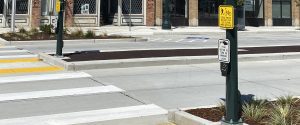
Mid-Block Crosswalk Accessibility Requirements Map

New webinars! RRFB bootcamp 2026: MUTCD changes + crosswalk lighting
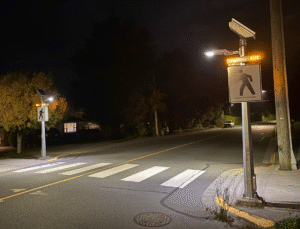
New webinar! Lighting the way: How crosswalk illumination enhances RRFB performance
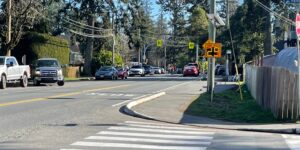
How SPEEDCHECK-MX keeps students safe and enforcement costs low in Colwood, BC
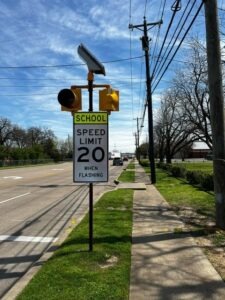
Connected Beacons Transform School Zone Maintenance in Arlington, TX

Radar Speed Sign Application Guide

Carmanah Technologies Expands MX Series with SpeedCheck® Connected Radar Speed Signs

Ontario Traffic Manual Pedestrian Crossovers Guide
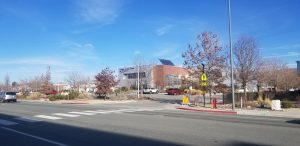
Nevada high school boosts safety with new RRFB crosswalk

Making Sense of Rulemaking for the MUTCD’s 11th edition

School Zone Safety Application Guide

Tips for installing advance pedestrian warning signs and RRFBs
Carmanah Technologies Expands MX Series with SpeedCheck® Connected Radar Speed Signs

Carmanah launches new chevron signs with remote connectivity for rural roads

Building walkability in a rural community: RRFBs in Esko, Minnesota